By Lisa Thompson
At Crescent City Adventist School, hands-on learning is an important part of the classroom experience. From science lessons to caring for God’s creation, students are encouraged to learn by doing. As principal, I have the privilege of watching students discover, explore, and grow through experiences like our annual duckling project.
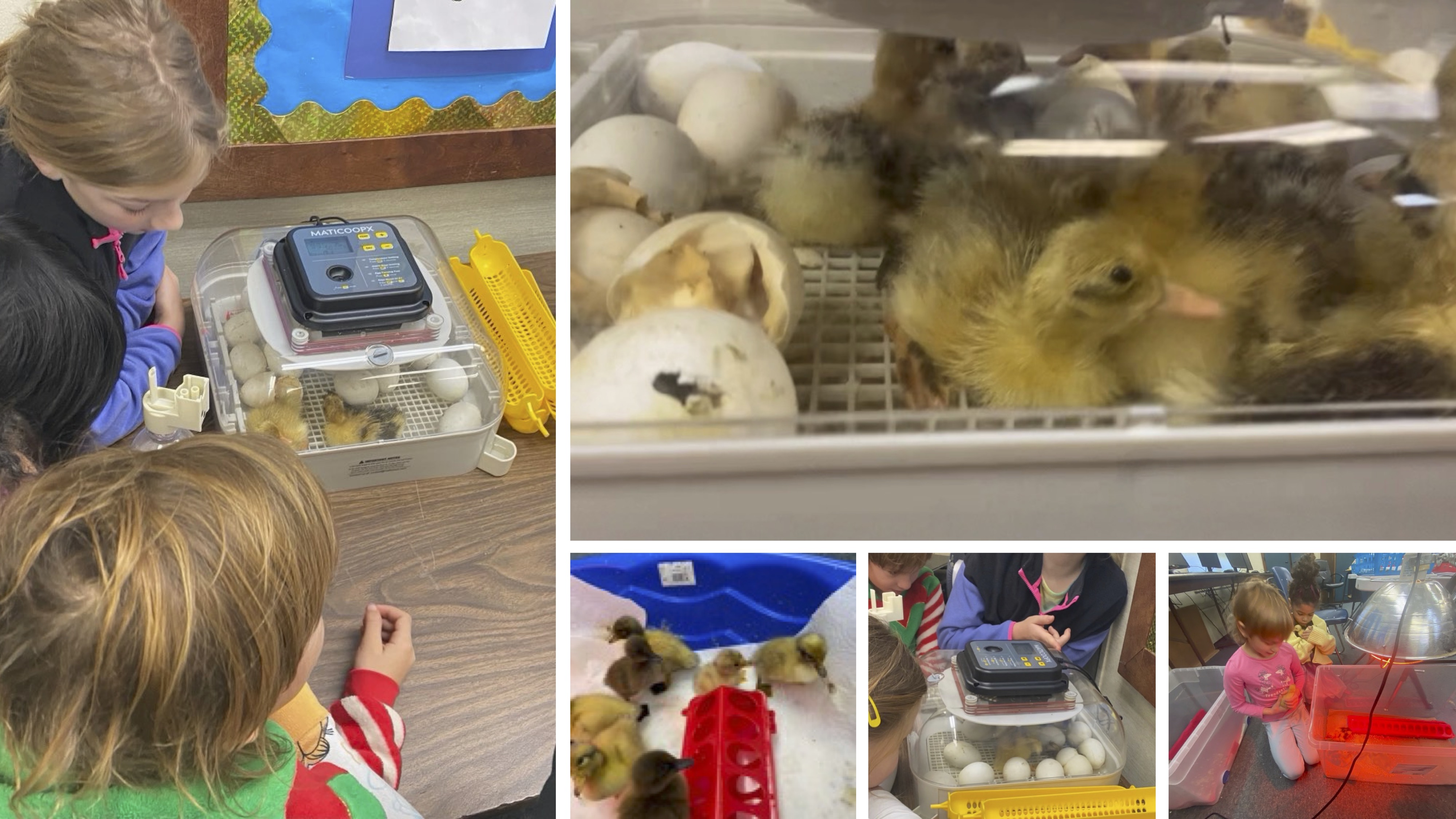
A few years ago, I bought a small incubator for the classroom, thinking it would be a fun project for the students. It has become something we all look forward to every year.
We begin by placing the eggs inside and then we wait. Around day 5 and again on day 11, we “candle” them—holding a bright light up to the shell so we can see what is happening inside. The students gather around to look. At first, we see tiny veins forming, and later, small movements. It never gets old watching their excitement as they realize something is growing inside.
With duck eggs, we count down 28 days to hatch day. Along the way, we talk about how the incubator provides the warmth and conditions a mother duck would naturally provide. When the first cracks appear and the ducklings begin to hatch, the classroom fills with excitement.
For about two weeks, the ducklings become part of our classroom family. Each morning, while we clean their kiddie pool, students take turns holding them. They watch how quickly the ducklings grow, how their soft down changes, and how they respond to sound—especially at feeding time. They learn that caring for something small requires patience, attention, and responsibility.
When weather allows, we take the ducklings outside. Students love finding bugs, grass, and weeds for them to eat while observing how they explore—pecking, splashing, and staying close together.
When the ducklings leave school, they usually come home with me, though one year we shared them with families in the community. Even cleanup becomes part of learning as we use the wood shavings from their pool as mulch around the fruit trees we planted last year.
By the end of the project, students have learned far more than the science of hatching a duckling. They have experienced the joy of discovery, the responsibility of caring for another living thing, and the reminder that some of the most meaningful lessons happen when we slow down and pay attention to the world around us.
Featured in Northern Lights, July 23, 2026
#nccsda